Choosing among quilting frames for beginners can feel harder than choosing your first quilt pattern. The right frame should hold fabric evenly, suit your workspace, and make long stitching sessions comfortable without adding unnecessary setup.
We’ve selected 10 options spanning lap frames, hoops, table-top designs, Q-Snap systems, and full-size floor frames. Use the guide below to match frame style and size to your projects, available space, and preferred quilting technique.
Best 10 Quilting Frames for Beginners Picks for 2026
Best Adjustable Floor Frame
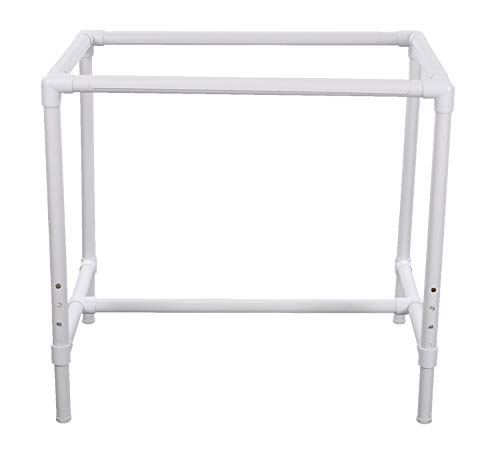
- 39 by 28-inch work area
- Adjustable height and four tilt angles
- Lightweight PVC with tension covers
Best For: Beginners needing a roomy, adjustable floor frame
Best Traditional Hoop

- 12-inch round working area
- Smooth, rounded basswood edges
- Tension bolt helps keep fabric taut
Best For: Beginners learning with a compact wooden hoop
Best Multi-Size Set

- Includes 11, 8, and 6-inch frames
- Extension kit adds flexibility
- Clamps adjust tension without removing fabric
Best For: Beginners wanting several sizes for quilting and crafts
Best Lap Frame

- 14 by 14-inch square frame
- Made for quilt-as-you-go methods
- Assembles and disassembles for travel
Best For: Beginners wanting a portable lap-quilting frame
Best Compact Frame

- Lightweight PVC construction
- Simple clamp-based fabric setup
- Adjustable tension for small projects
Best For: Beginners making compact quilting, embroidery, or cross-stitch projects
Best Full-Size Option
Edmunds American Legacy Quilt Frame

- Supports up to a 24 x 90-inch setup
- Adjusts down to 24 x 45 inches
- Includes detachable rods and instructions
Best For: Beginners handling larger quilts or quilting with a group
Best Machine-Learning Frame

- Designed for beginning machine quilters
- Fits many 8- to 13-inch throat machines
- Offers up to an 11 x 15-inch quilting area
Best For: Learning machine quilting on small projects with a compatible domestic sewing machine
Lightweight Starter Frame
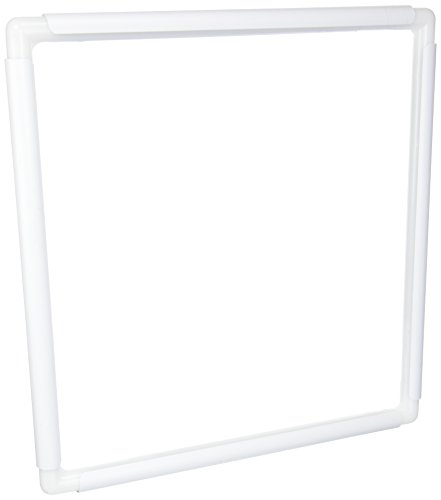
- Lightweight PVC tubing construction
- Simple clamp-based fabric setup
- 17-by-17-inch square work area
Best For: Beginners wanting a portable square frame
Large Floor Setup
BEN YEDD Quilter's Floor Frame

- Large 38.9-by-29-inch footprint
- Supports thicker, larger fabrics
- Metal and PVC frame construction
Best For: Beginners working on large floor-based projects
Compact Project Frame

- Compact 11-by-11-inch work area
- Lightweight 8.16-ounce plastic frame
- Adjustable clamp tension
Best For: Beginners working on small projects
Best Adjustable Floor Frame – Spacious Quilting Support
For beginners comparing quilting frames for beginners, the Dritz Quilter’s Floor Frame offers a generous 39 by 28-inch work area with adjustable height and tilt. Its lightweight PVC construction is designed for easy assembly, compact storage, and flexible seated or standing use.
Best For: Beginners who want a roomy floor frame with adjustable positioning for larger quilting projects.
Pros:
- Spacious 39 by 28-inch working area
- Height adjusts from 30 to 37 inches
- Legs tilt to four stitching angles
- Includes four fabric-tension covers
Cons:
- Floor-frame format requires more space than a lap hoop
- Plastic construction may feel less substantial than wood
This is a versatile starting point for beginners who value workspace and ergonomic adjustability. The included tension covers also help keep quilt layers smooth and secure while stitching.
Best Traditional Hoop – 12-Inch Basswood Quilt Hoop
Among quilting frames for beginners, this 12-inch round Edmunds hoop is a straightforward choice for learning hand quilting. Its smooth, rounded basswood edges and tension bolt hold fabric securely while keeping the design lightweight and easy to handle.
Best For: Beginners who prefer a compact, traditional wooden hoop for smaller quilting areas.
Pros:
- Lightweight 12-inch round design
- Smooth, sanded rounded edges
- Solid basswood construction
- Plated tension bolt helps hold work wrinkle-free
Cons:
- Smaller work area than a floor frame
- Round shape may require repositioning on larger quilts
This hoop keeps the setup simple and portable, making it approachable for first projects. Its 12-inch size is best suited to focused sections rather than supporting an entire large quilt at once.
Best Multi-Size Set – Q-Snap Beginner Frame Bundle
This Q-Snap bundle gives beginners exploring quilting frames for beginners several sizes to try: 11 by 11, 8 by 8, and 6 by 6 inches, plus an extension kit. The PVC frames adjust fabric tension with removable clamps, helping reduce hoop wrinkles without taking the fabric off the frame.
Best For: Beginners who want multiple frame sizes for quilting and other fabric crafts.
Pros:
- Includes three frame sizes and an extension kit
- Clamps adjust tension without removing fabric
- Designed to eliminate hoop wrinkles
- Lightweight, durable PVC construction
Cons:
- Largest included frame is 11 by 11 inches
- Multiple pieces may require more storage organization
The bundle is a flexible way to experiment with different project scales while learning. Its clamp-based system is especially useful if you want to fine-tune tension during stitching.
Best Lap Frame – Compact Quilt-N-Go Design
For beginners seeking quilting frames for beginners that fit a lap-based workflow, the Dritz Quilt-N-Go provides a 14 by 14-inch square workspace. It is intended for quilt-as-you-go methods and can be assembled or disassembled for storage and travel.
Best For: Beginners who want a compact frame for lap quilting, travel, or quilt-as-you-go projects.
Pros:
- 14 by 14-inch square work area
- Designed for quilt-as-you-go and lap methods
- Easy to assemble and disassemble
- Lightweight 12-ounce PVC construction
Cons:
- Smaller workspace than a floor frame
- Focused on lap quilting rather than standing or seated floor use
This compact PVC frame is a practical entry point for beginners who want portability and a simple setup. Its square format gives a little more room than a small hoop while remaining easy to store.
Best Compact Frame – Q-Snap 17 x 17 Frame
For beginners comparing quilting frames for beginners, the Q-Snap 17 x 17 frame offers a lightweight, straightforward way to hold fabric for quilting, embroidery, or cross-stitch work. Its PVC construction and clamp-based setup make fabric placement and tension adjustments simple.
Best For: Beginners working on compact quilting or embroidery projects who want an easy-to-adjust rectangular frame.
Pros:
- Lightweight PVC tubing weighs about 0.4 kg.
- Clamp design is simple to install and gentle on fabric.
- Ribbed clamp surface supports adjustable fabric tension.
- Compact 17 x 17-inch rectangular size.
Cons:
- The 17 x 17-inch size is intended for smaller projects.
- Plastic construction may not suit shoppers seeking a full-size quilting frame.
This is a practical starter option when portability and uncomplicated tension adjustment matter more than handling a large quilt.
Best Full-Size Option – Edmunds American Legacy Quilt Frame
For beginners looking at quilting frames for beginners, the Edmunds American Legacy provides a larger setup for learning traditional quilt framing. It can be configured from 24 x 90 inches down to 24 x 45 inches, making the frame adaptable for an individual quilter or a group.
Best For: Beginners who need a full-size frame for larger quilts or shared quilting sessions.
Pros:
- Full-size frame accommodates projects up to 24 x 90 inches.
- Can be shortened to a 24 x 45-inch configuration.
- Designed for use by a single quilter or a group.
- Includes detachable rods and instructions.
Cons:
- The full setup is 90 inches long and requires substantial space.
- Its larger format is less convenient for highly portable quilting.
Choose this model when project capacity is the priority. Its adjustable length gives beginners room to start smaller and expand to full-size quilting work.
Best Machine-Learning Frame – Mini Quilter Hoop Frame
Among quilting frames for beginners, the Mini Quilter is designed to make hoop-frame quilting with a domestic sewing machine easier to learn. It works with most machines having an 8- to 13-inch throat length and provides a quilting area of up to 11 x 15 inches.
Best For: Beginners learning machine quilting or longarm-style techniques on small projects with a compatible home sewing machine.
Pros:
- Designed specifically as a beginner learning tool.
- Works with most sewing machines with an 8- to 13-inch throat.
- Provides up to an 11 x 15-inch quilting area.
- Suitable for small quilting projects.
Cons:
- The quilting area is limited compared with a full-size frame.
- Actual usable area may be smaller with a smaller machine.
- At 19 pounds, it is less lightweight than a simple handheld frame.
This is a focused choice for beginners who want guided practice with machine quilting. Confirm your machine’s throat length and expect the frame to favor smaller projects.
Lightweight Starter Frame – Q-Snap 17-Inch Square
For beginners comparing quilting frames for beginners, the Q-Snap 17 by 17-Inch offers a simple square setup made from lightweight PVC tubing. Lay the fabric over the frame and press the clamps down to create the desired tension.
Best For: Beginners who want a compact, lightweight frame for square quilting, embroidery, or cross-stitch projects.
Pros:
- Lightweight PVC construction weighs 12.64 ounces.
- Clamp design is straightforward to use.
- 17-by-17-inch square size provides a moderate working area.
- Ribbed-style clamping is designed to hold fabric tension.
Cons:
- The fixed 17-by-17-inch size may not suit larger projects.
- Plastic construction may feel less substantial than a metal frame.
Its simple clamp-and-stretch setup makes this a practical entry point for beginners who prefer a portable square frame rather than a floor-standing workstation.
Large Floor Setup – BEN YEDD Quilter's Floor Frame
Among quilting frames for beginners, the BEN YEDD Quilter’s Floor Frame is aimed at larger work. Its rectangular 38.9-by-29-inch design combines metal and PVC components and is described as suitable for thicker and larger fabrics.
Best For: Beginners who need a large, floor-based support frame for substantial quilting, patchwork, embroidery, or cross-stitch projects.
Pros:
- Large 38.9-by-29-inch rectangular footprint.
- Designed for thicker and larger fabrics.
- Floor-frame format provides a dedicated work setup.
- Combines metal and PVC materials.
Cons:
- At 4.1 kg, it is considerably heavier than compact plastic frames.
- Its large footprint requires more floor space.
- No warranty is listed in the supplied details.
This model makes the most sense when project size and fabric support matter more than portability. Measure your available workspace before choosing this larger frame.
Compact Project Frame – Q-Snap 11-Inch
For beginners seeking quilting frames for beginners with a smaller footprint, this Q-Snap frame measures 11 by 11 inches. Its PVC construction and clamp system let you lay the fabric over the frame, press the clamps into place, and adjust tension by turning the clamps.
Best For: Beginners handling small quilting, embroidery, or cross-stitch projects who want a compact plastic frame.
Pros:
- Compact 11-by-11-inch size is easy to manage.
- Lightweight plastic construction weighs 8.16 ounces.
- Clamp design is gentle and simple to use.
- Clamp direction allows tension to be tightened or loosened.
Cons:
- The 11-inch work area is limited for larger quilts.
- Plastic construction may be less robust than metal alternatives.
This is a sensible starting frame for small projects and limited workspaces. Choose a larger model if you need to keep more fabric spread out at once.
How We Picked These Quilting Frames for Beginners
We focused on the features that matter most when learning: straightforward assembly, dependable fabric tension, comfortable access to the quilt, useful working dimensions, and a design that fits typical beginner spaces. The selection includes compact hoops and lap frames for portability, modular Q-Snap systems for flexibility, and floor frames for larger quilts or hands-free stitching.
We also considered whether each frame is easy to store, adjust, and use for more than one project. A beginner-friendly frame should help you develop consistent stitches rather than require complicated adjustments before every session.
Quick Comparison
| Frame type | Best for | Main advantage | Potential limitation |
|---|---|---|---|
| Round hoop | Small projects and practice | Simple, lightweight setup | Limited quilting area |
| Lap frame | Sofa or travel stitching | Compact and accessible | May need hand support |
| Q-Snap frame | Flexible projects | Interchangeable sizes | Requires fitting fabric securely |
| Table-top frame | Small workspaces | Stable elevated position | Less suitable for large quilts |
| Floor frame | Large quilts and frequent use | Hands-free, full-size support | Uses more storage space |
Key Buying Factors for Quilting Frames for Beginners
Frame Size and Quilt Scale
Match the working area to your projects. An 8- to 12-inch hoop is practical for learning, blocks, embroidery, and small panels. Frames around 14 to 17 inches provide more room without becoming difficult to manage. Full-size floor frames are better for large quilts but require a dedicated area.
Stability and Fabric Tension
Look for a frame that keeps layers smooth without forcing you to retighten constantly. Rigid hoops and snap-style rails are convenient for small areas, while a supported floor frame can reduce hand fatigue during extended sessions.
Portability and Storage
If you stitch in different rooms or travel, prioritize a lap frame, hoop, or frame that breaks down easily. A floor frame makes sense only when you have enough room to leave it assembled or store its components safely.
Adjustability and Comfort
Height, angle, and access can affect posture as much as frame size. Choose an adjustable stand if you expect longer sessions, and check that the frame leaves enough clearance for your needle, hands, and quilt layers.
Materials and Setup
Wood frames can offer a traditional, sturdy feel, while PVC or modular plastic systems are often lighter and easier to reconfigure. Confirm the included parts and assembly requirements before buying, especially for stand-style frames.
Who Should Buy Which Quilting Frames for Beginners?
For the Simplest Starting Point
Choose a basic round hoop if you want an inexpensive way to practice hand quilting, stitch small blocks, or test whether hoop quilting suits you.
For Portable and Comfortable Stitching
A lap frame is a strong choice for couch quilting, classes, and occasional projects. It provides more working room than a small hoop while remaining easy to move.
For Flexibility Across Projects
Q-Snap systems are ideal if you expect to work on different-sized pieces. Multiple frame sizes can be more useful than purchasing several fixed hoops.
For Large Quilts or Regular Quilting
Select a floor frame when you want hands-free support, a larger working surface, and a setup designed for frequent use. Make sure your room can accommodate it before ordering.
For most beginners, the best choice is the smallest frame that comfortably fits the projects you plan to make. Starting compact keeps setup simple; upgrading later is easier once you know your preferred quilting style.