The right quilting frame can make long projects easier to organize, more comfortable to work on, and more consistent from block to block. Rolling and adjustable designs are especially useful when you need to manage a large quilt without constantly repositioning the fabric.
These 10 options cover full-size floor frames, portable multi-frame systems, lap frames, hoop-style setups, and machine-compatible quilting frames. Compare their working size, portability, adjustability, and machine compatibility before choosing.
Best 10 Quilting Frames with Rollers Picks for 2026
Best Full-Size Option
Edmunds American Legacy Quilt Frame

- Expands from 45 to 90 inches long
- Suitable for solo or group quilting
- Includes detachable rods and instructions
Best For: Large quilts and flexible frame sizing
Best Adjustable Floor Frame
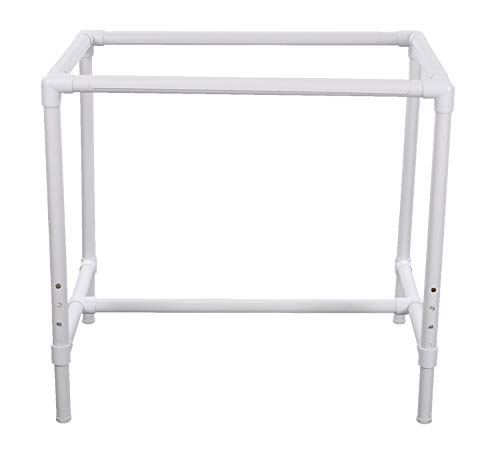
- 39-by-28-inch working area
- Height adjusts from 30 to 37 inches
- Four tilting angles and compact storage
Best For: Portable seated or standing quilting
Best Rotating Hoop Stand

- Rotates and tilts 360 degrees
- Adjusts up to 37.5 inches high
- Folds to 16 inches for storage
Best For: Portable hand quilting and easy-chair use
Best Machine-Quilting Roller Frame
John Flynn's Portable Multi-Frame

- Three-roll frame for machine or hand quilting
- Includes rods, PVC tubes, tension materials, and DVD
- Handles projects up to roughly 38 to 45 inches wide
Best For: Free-motion machine quilting and smaller projects
Best Compact Pick

- 14-by-14-inch lap-frame design
- Easy to assemble and store
- Lightweight PVC construction
Best For: Portable quilt-as-you-go projects
Best Adjustable Frame

- Works with domestic or Q'nique machines
- Height-adjustable steel frame
- Leveling feet improve setup stability
Best For: Adjustable machine quilting across quilt sizes
Best Large Floor Frame
BEN YEDD Quilter's Floor Frame

- Large 38.9-by-29-inch work area
- Supports thicker and larger fabrics
- Metal and PVC-pipe construction
Best For: Large quilting, embroidery, and patchwork projects
Best Overall
Grace 16X Longarm Quilting Machine & Frame

- 16-inch throat space for large patterns
- Steel Q-Zone frame supports any quilt size
- Ergonomic controls and bright lighting
Best For: Dedicated longarm quilting and large projects
Best Simple Hoop
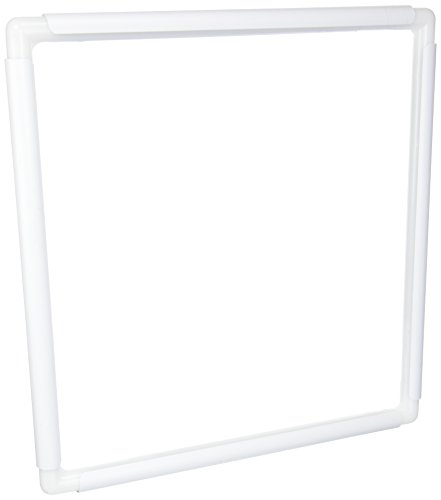
- Lightweight 12.64-ounce PVC design
- 17-by-17-inch square frame
- Clamp system secures fabric without complex setup
Best For: Compact, basic hoop-style quilting
Best for Beginners
Mini Quilter Tabletop Hoop Frame

- Works with many 8- to 13-inch throat machines
- Up to 11-by-15-inch quilting area
- Designed for small projects and learning
Best For: Learning longarm-style quilting with a home machine
Best Full-Size Option – Edmunds American Legacy Quilt Frame
For quilters seeking quilting frames with rollers, this full-size Edmunds frame provides a spacious rectangular setup that can accommodate solo quilting or group projects. Its adjustable length makes it practical for both larger quilts and smaller work.
Best For: Full-size quilting projects, group quilting, and users who want an adjustable 45- to 90-inch frame.
Pros:
- Offers a full-size 24-by-90-inch working area.
- Can be reduced to 24 by 45 inches for smaller projects.
- Includes detachable rods and setup instructions.
Cons:
- Its 90-inch maximum length requires substantial setup space.
- The supplied notes do not indicate a roller-based design.
This is a strong choice when size flexibility matters most. Consider your available floor space before choosing the full-length configuration.
Best Adjustable Floor Frame – Dritz Quilter's Floor Frame
Among quilting frames with rollers, this Dritz floor frame stands out for adjustable positioning rather than a roller system. Its lightweight PVC construction, variable height, and tilting legs support seated or standing quilting.
Best For: Quilters who want a portable floor frame with adjustable height and working angles.
Pros:
- Provides a 39-by-28-inch quilting area.
- Height adjusts from 30 to 37 inches.
- Legs tilt to four comfortable angles.
- Includes four fabric-tension covers to help keep layers smooth.
Cons:
- The supplied notes do not mention rollers.
- Plastic construction may be less suitable for shoppers seeking a traditional rigid frame.
Choose this model for positioning flexibility and compact storage. It is especially practical if you alternate between seated and standing work.
Best Rotating Hoop Stand – Edmunds Quilters Wonder! Hoop
For shoppers comparing quilting frames with rollers, this rotating hoop offers a different approach. The 18-inch hoop turns and tilts 360 degrees, giving you access to multiple sides of the quilt without repositioning the entire stand.
Best For: Hand quilters who want a compact, adjustable hoop for use in an easy chair.
Pros:
- Rotates and tilts a full 360 degrees.
- Height adjusts up to 37.5 inches.
- Folds down to 16 inches for storage.
- Lightweight at 4.7 pounds and made in the USA.
Cons:
- The 18-inch hoop is smaller than a full-size quilt frame.
- The supplied notes do not indicate rollers or machine-quilting compatibility.
This stand favors maneuverability and portability over large-capacity quilting. It is a convenient alternative for smaller sections and comfortable hand quilting.
Best Machine-Quilting Roller Frame – John Flynn's Portable Multi-Frame
John Flynn's Portable Machine Quilting Multi Frame W/ 48" Rails & DVD (One Pack)
Check Price On AmazonThis John Flynn system is the most directly aligned with quilting frames with rollers: its three-roll design works with a sewing machine for free-motion quilting and also supports hand quilting. The included rods, tension materials, and DVD make it a ready-to-practice setup.
Best For: Machine quilters working on wall hangings, smaller quilts, or projects up to about 38 to 45 inches wide.
Pros:
- Three-roll design supports smooth quilt rolling.
- Works with a sewing machine or for hand quilting.
- Includes PVC roller tubes, fiberglass rods, tension tapes, muslin leaders, hardware, and an instructional DVD.
- Can be modified for other widths using new rods.
Cons:
- The standard frame is intended for relatively narrow projects.
- Wider configurations require separately sourced conduit and modification.
- Its 48-inch frame size may not suit full-size quilts.
For shoppers specifically seeking a roller-based frame, this is the clearest match in the group. Its included learning materials and machine-quilting compatibility make it useful for practice and smaller projects.
Best Compact Pick – Dritz Quilt-N-Go Lap Frame
If you want quilting frames with rollers for portable, quilt-as-you-go projects, the Dritz Quilt-N-Go offers a compact 14-by-14-inch lap-frame format. Its PVC construction and simple assembly make it practical for quilting at home, while traveling, or during storage between projects.
Best For: Quilters who prefer the lap method and need a small, portable frame.
Pros:
- Designed for quilt-as-you-go or lap quilting.
- Easy to assemble and disassemble.
- Compact 14-by-14-inch size suits storage and travel.
- Lightweight 12-ounce construction.
Cons:
- The compact size may not suit large quilt sections at once.
- PVC construction may feel less substantial than a metal frame.
- No warranty is listed.
This is a straightforward choice for portable quilting rather than a large floor setup. Its small footprint and lap-focused design are the main advantages for beginners and space-conscious crafters.
Best Adjustable Frame – Grace Q-Zone Hoop Frame
For shoppers comparing quilting frames with rollers for machine quilting, the Grace Q-Zone Hoop-Frame is built around adjustable, zone-based quilting. It works with a domestic sewing machine or a Q’nique machine and uses a steel-heavy frame with leveling feet for a more adaptable setup.
Best For: Machine quilters who want an adjustable frame for quilts of different sizes.
Pros:
- Compatible with a domestic or Q’nique sewing machine.
- Steel construction is designed for durability.
- Height-adjustable legs support sitting or standing use.
- Leveling feet help stabilize the frame on the floor.
Cons:
- It requires a compatible sewing machine, which is not included in the supplied details.
- The adjustable floor-frame format may require more setup space than a lap frame.
- Its zone-quilting approach may not suit shoppers seeking a simple hand-quilting frame.
The Q-Zone is the more flexible option for machine quilting and changing working heights. Its steel body, leveling feet, and zone method make it suitable for tackling different quilt sizes with a compatible machine.
Best Large Floor Frame – BEN YEDD Quilter's Floor Frame
If you need quilting frames with rollers for larger fabric work, the BEN YEDD quilter’s floor frame provides a roomy rectangular work surface measuring 38.9 by 29 inches. Its metal and PVC-pipe construction is intended for thicker and larger fabrics, with support brackets suited to quilting, embroidery, patchwork, and cross-stitch.
Best For: Crafters working with larger or thicker fabrics who want a floor-style support frame.
Pros:
- Large 38.9-by-29-inch rectangular format.
- Suitable for thicker and larger fabrics.
- Can support quilting, embroidery, patchwork, and cross-stitch work.
- Combines metal and PVC-pipe materials.
Cons:
- Its large footprint needs dedicated floor space.
- At 4.1 kg, it is less portable than a small lap frame.
- No warranty is listed.
This frame stands out when working area matters more than portability. Choose it for larger textile projects and floor-based crafting, but measure your available space before buying.
Best Overall – Grace 16X Longarm Quilting Machine & Frame
For quilters seeking quilting frames with rollers and a dedicated longarm setup, the Grace 16X combines a 16-inch throat-space machine with the Q-Zone Hoop quilting frame. Its steel construction and zone-quilting approach support quilts of any size, while the controls and lighting are designed for practical operation.
Best For: Quilters who want a dedicated longarm machine and frame for large quilting projects.
Pros:
- 16-inch throat space supports large patterns.
- Ergonomic handles and simple two-button controls help reduce hand, arm, and shoulder strain.
- Steel frame construction is designed for durability.
- Throat and bobbin lighting, plus a bobbin estimator, improve visibility and monitoring.
Cons:
- At 109 pounds, the setup is substantially heavier than smaller hoop frames.
- The listed warranty is 30 days from purchase.
- The dedicated machine-and-frame system requires more space than tabletop options.
This is the most capable choice here for quilters prioritizing throat space, speed, lighting, and an integrated frame system over portability.
Best Simple Hoop – Q-Snap 17-Inch Square Frame
The Q-Snap 17-inch frame is a lightweight, straightforward option among quilting frames with rollers alternatives. Its PVC tubing and clamp system let you position fabric over the frame and secure it by gently pressing the clamps down, making it suitable for basic hoop-style work.
Best For: Quilters who want a compact, lightweight square hoop frame for simple fabric holding.
Pros:
- Lightweight design weighs 12.64 ounces.
- PVC tubing is described as lighter and more durable than other materials.
- Simple clamp setup stretches fabric around the frame.
- 17-by-17-inch square working area.
Cons:
- This is a basic hoop frame rather than a roller-based quilting frame.
- The 17-by-17-inch dimensions limit the working area compared with larger systems.
- It does not include a quilting machine or motorized controls.
Choose the Q-Snap when low weight and uncomplicated fabric clamping matter more than machine integration, rollers, or a large quilting workspace.
Best for Beginners – Mini Quilter Tabletop Hoop Frame
The Mini Quilter is a practical entry point for shoppers comparing quilting frames with rollers for use with a domestic sewing machine. This tabletop hoop frame works with most machines having an 8- to 13-inch throat length and offers a quilting area of up to 11 by 15 inches.
Best For: Beginners learning longarm-style quilting with a compatible home sewing machine.
Pros:
- Designed to simplify the learning process for beginners.
- Compatible with most sewing machines with an 8- to 13-inch throat length.
- Provides up to an 11-by-15-inch quilting area.
- One-year warranty is listed.
Cons:
- The quilting area is smaller than that of a dedicated 16-inch longarm system.
- It is intended primarily for small quilting projects.
- Compatibility depends on the sewing machine’s throat length.
For those who already own a compatible domestic machine, the Mini Quilter offers a lower-complexity way to practice hoop quilting before moving to a larger dedicated frame system.
How We Picked These Quilting Frames with Rollers
We selected frames and hoop systems that address different quilting styles, workspace constraints, and experience levels. The lineup includes full-size floor frames for larger hand-quilting projects, compact lap and tabletop designs for portability, and machine-compatible options for longarm or domestic sewing machines.
Our comparison focuses on practical factors: working area, fabric control, frame stability, height adjustment, portability, assembly, and whether the design supports hand quilting, free-motion quilting, or a specific machine setup. Some products are not traditional roller frames, but they can still be useful alternatives when a hoop, lap frame, or adjustable machine frame better fits the project.
Quick Comparison
| Frame type | Best suited for | Main advantage |
|---|---|---|
| Full-size floor frame | Large hand-quilted quilts | More working space and stable support |
| Portable multi-frame | Travel and flexible setups | Rails can adapt to different quilt sizes |
| Lap or tabletop frame | Small projects and beginners | Compact, accessible, and easy to store |
| Hoop-style frame | Hand or domestic-machine quilting | Simple fabric tension and positioning |
| Machine-compatible frame | Longarm quilting | Designed around controlled machine movement |
Key Buying Factors for Quilting Frames with Rollers
Working Size and Quilt Capacity
Check the usable quilting area rather than the frame’s overall footprint. Larger roller frames reduce how often you need to advance a quilt, while compact frames are easier to fit in apartments, craft rooms, or shared spaces. Confirm the maximum quilt width and the amount of fabric each roller can hold.
Roller Design and Fabric Tension
Rollers should advance fabric smoothly and keep the quilt sandwich reasonably taut without stretching it. Look for secure fabric attachment, easy-to-reach adjustment points, and a locking mechanism that prevents unwanted movement while stitching.
Height, Angle, and Ergonomic Comfort
An adjustable frame can help reduce neck, shoulder, and wrist strain. Consider whether you prefer standing, sitting, or a tilted working position. A stable base matters just as much as adjustability, particularly when using a larger needle or machine.
Hand Quilting Versus Machine Quilting
Traditional floor frames are generally intended for hand quilting. Longarm and domestic-machine frames require adequate clearance, compatible rails, and a design that supports the machine’s weight and movement. Verify dimensions and compatibility before ordering.
Assembly, Storage, and Portability
Measure both the assembled footprint and the storage dimensions. Portable systems are convenient, but lighter construction may provide less resistance during stitching. If you frequently move projects, prioritize quick setup, manageable rail lengths, and uncomplicated fabric loading.
Who Should Buy Which Quilting Frames with Rollers?
Choose a full-size floor frame if you regularly quilt large projects and have dedicated workspace. A portable multi-frame is better for quilters who need adaptable rails or occasionally travel with their work. Lap and tabletop frames suit beginners, small quilts, and stitchers who want a low-cost or easy-to-store option.
Choose an adjustable hoop frame when you want a flexible setup for hand quilting or a domestic machine. Longarm users should focus on machine-specific frames and confirm the exact machine requirements. If comfort is your priority, favor adjustable height, smooth rolling action, reliable tension control, and a stable base over the lowest purchase price.